Cyrtostachys renda
ARECACEAE
•
Borneo
Available Inventory
Ready for pickup at Sunfish Gardens
7gal
$85
15gal
$185
25gal
$375
Field Grown
$750
Description
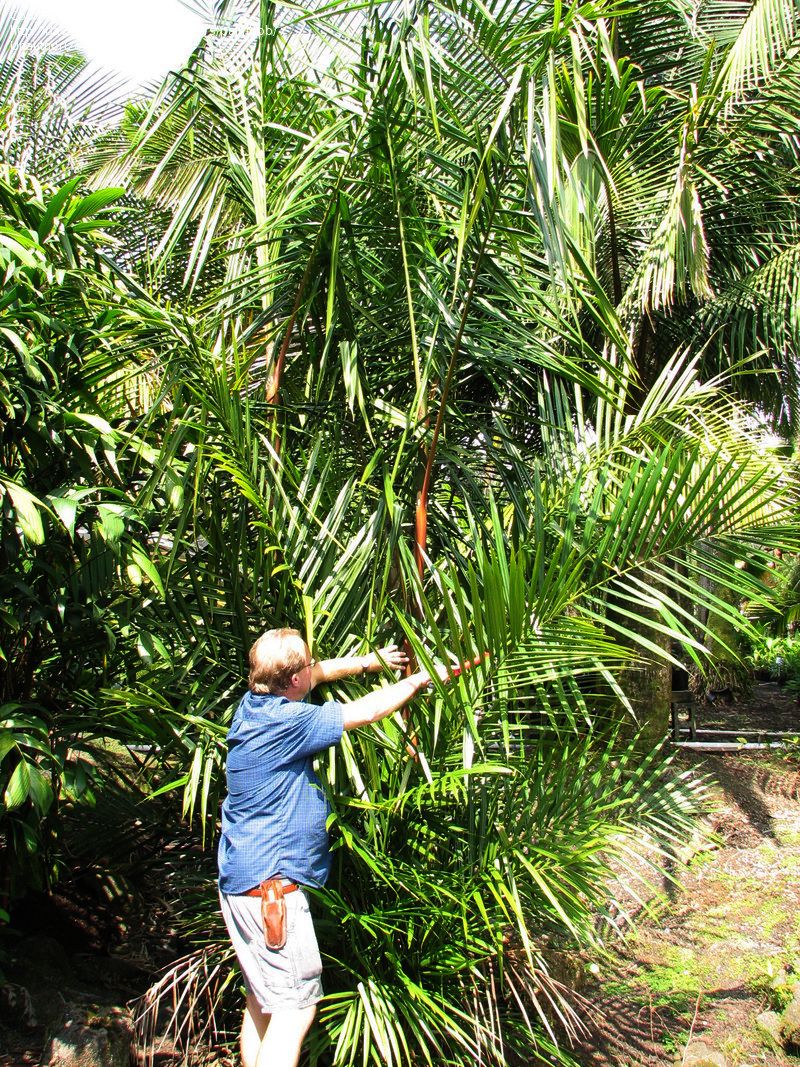
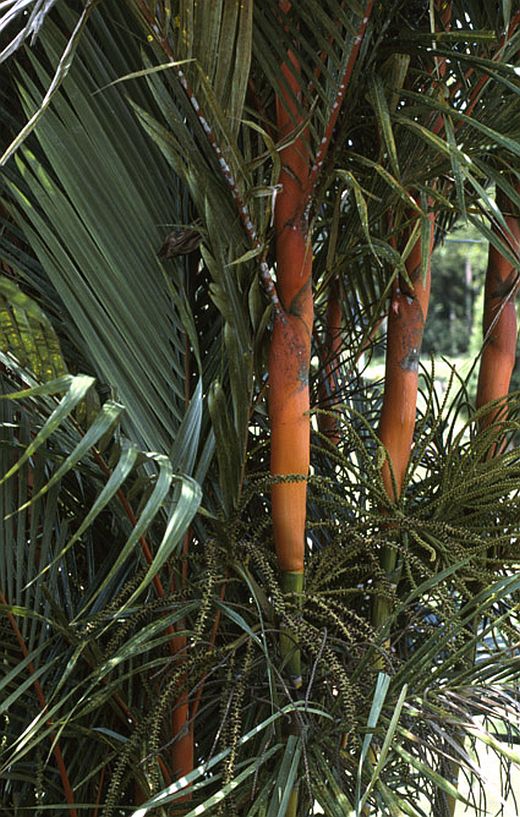
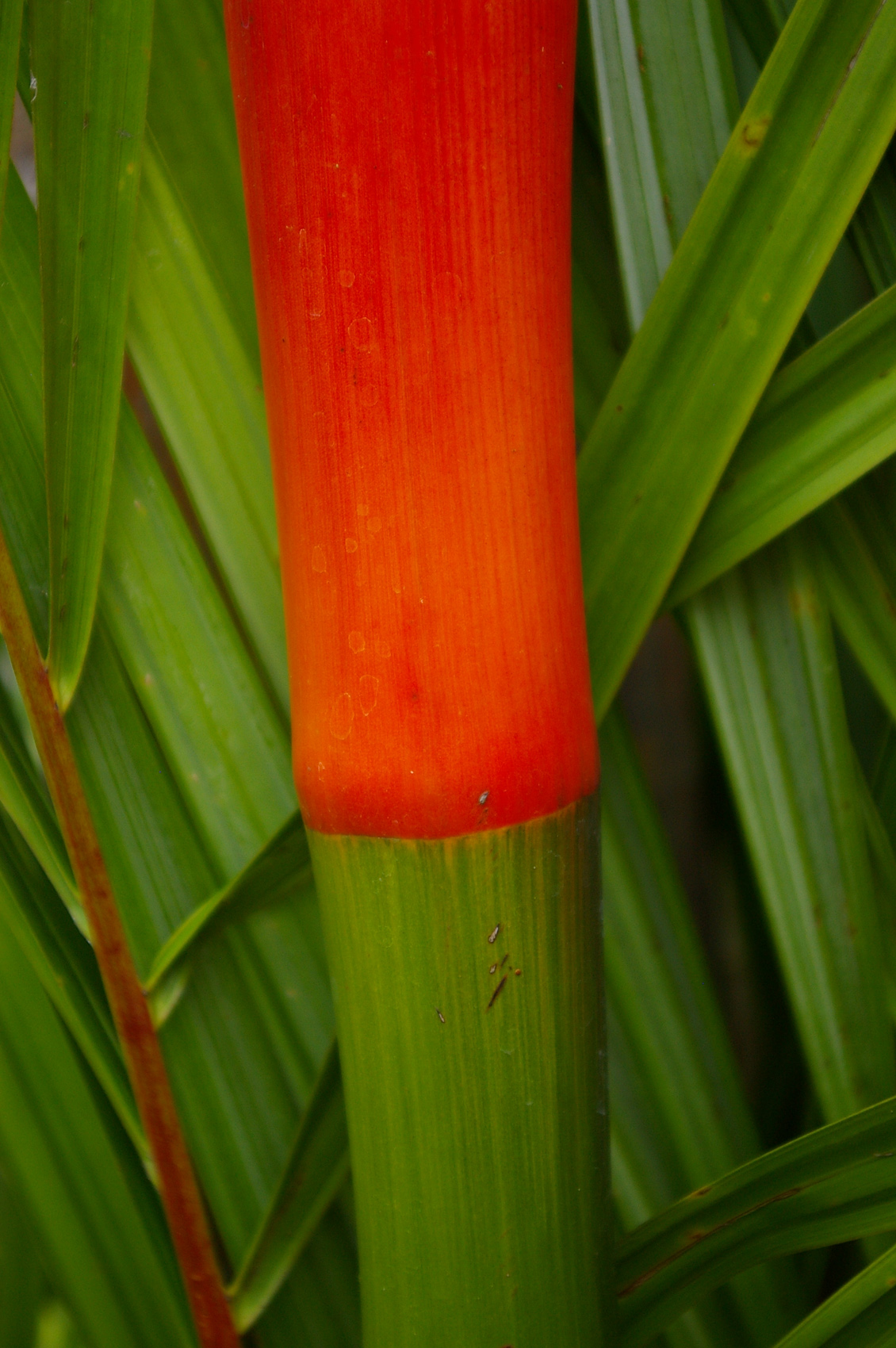
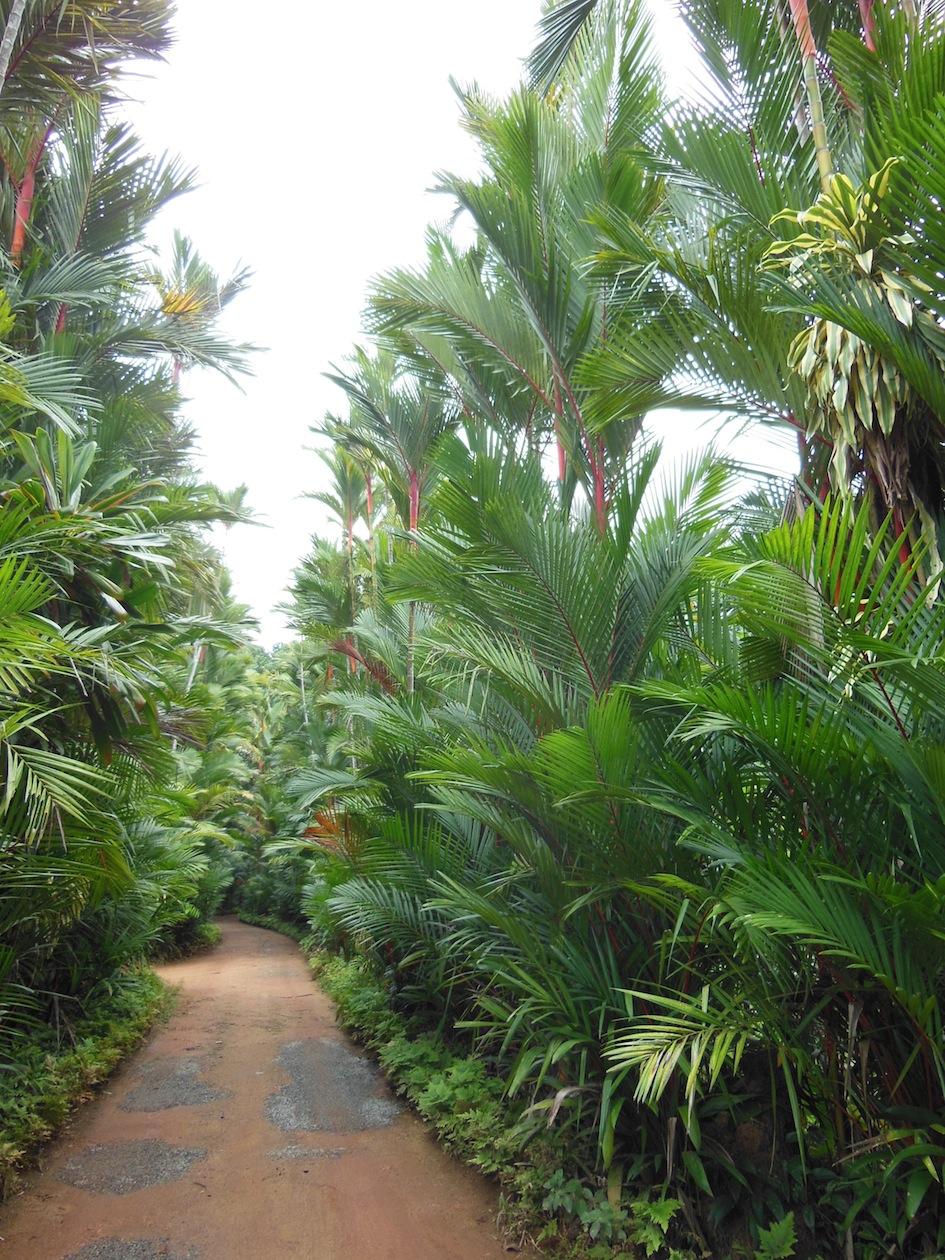
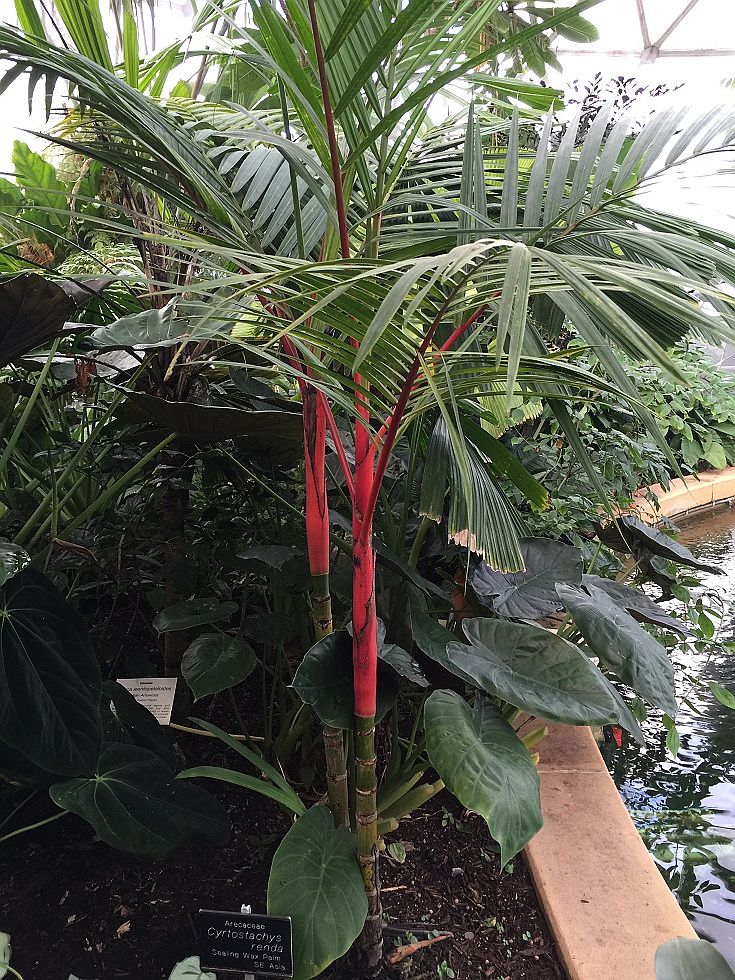
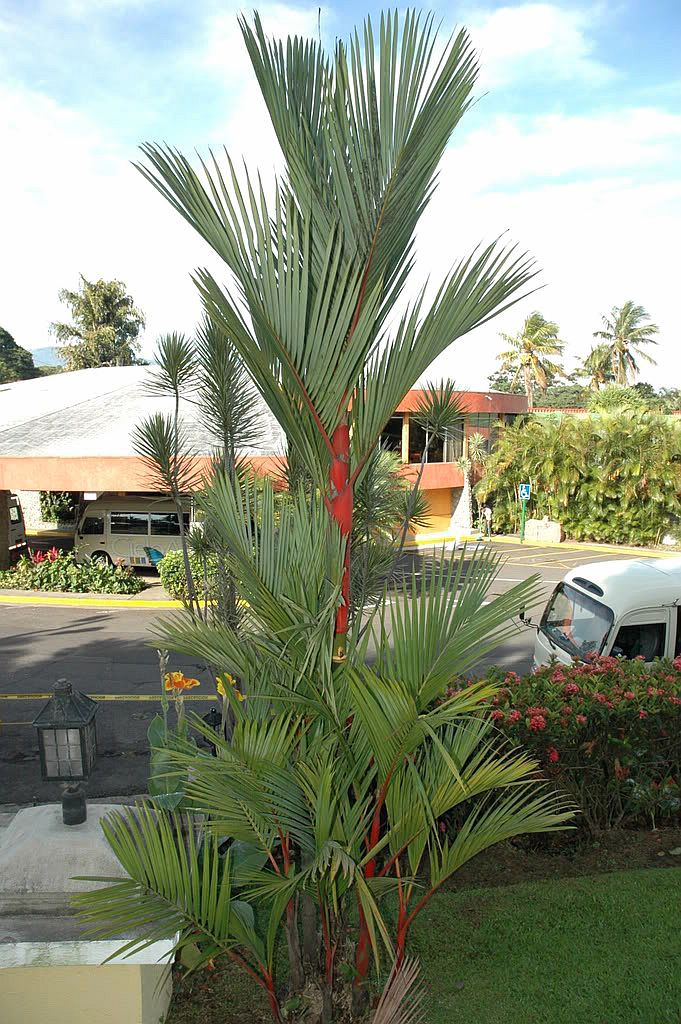
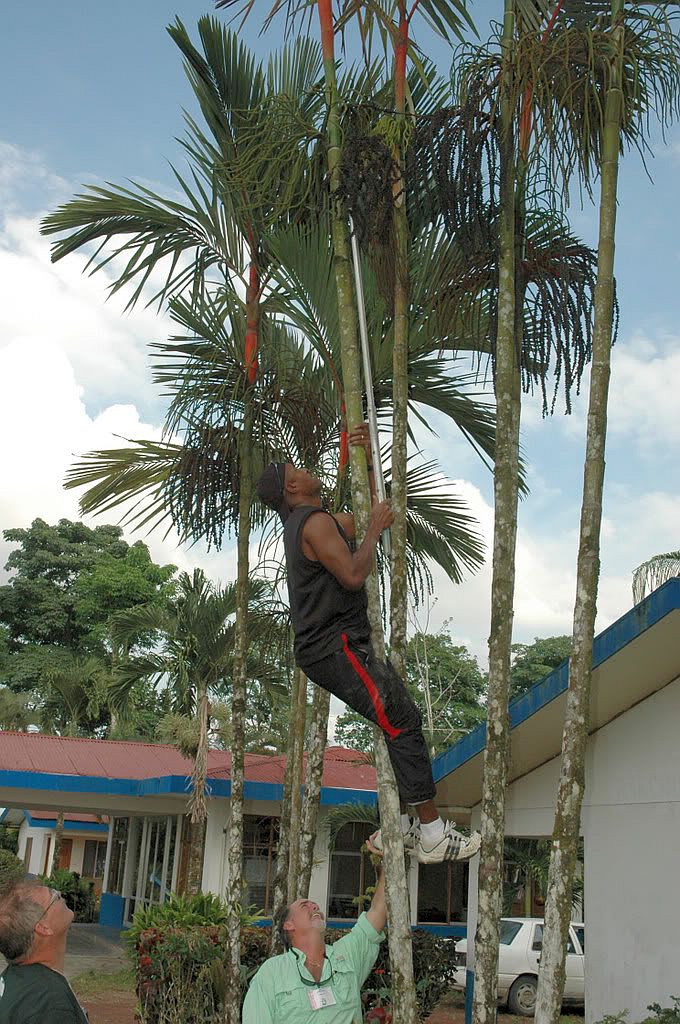
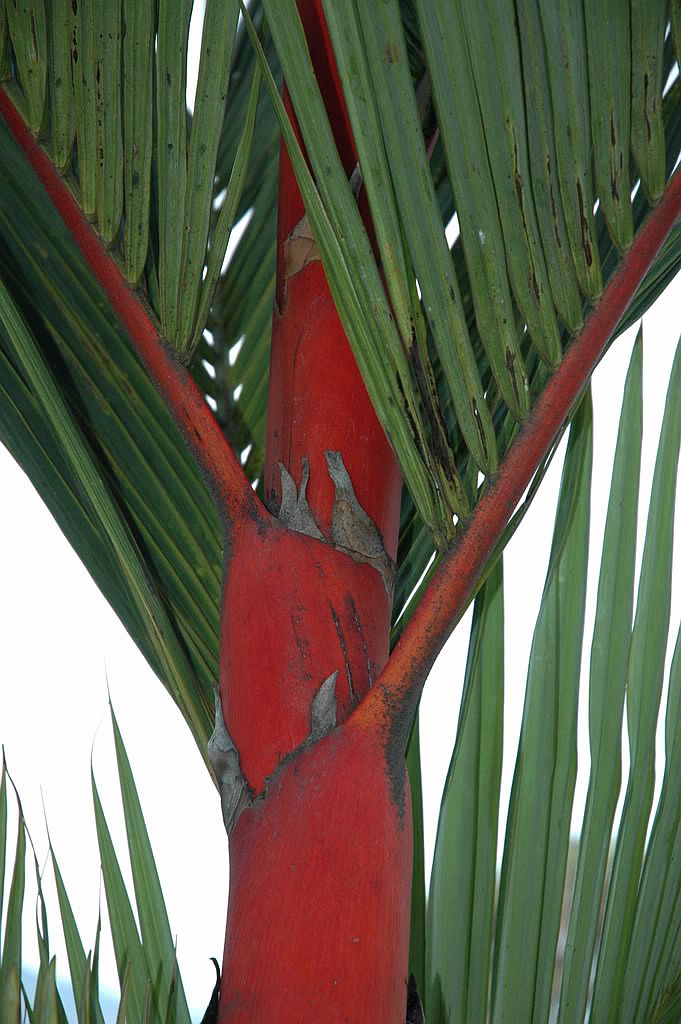
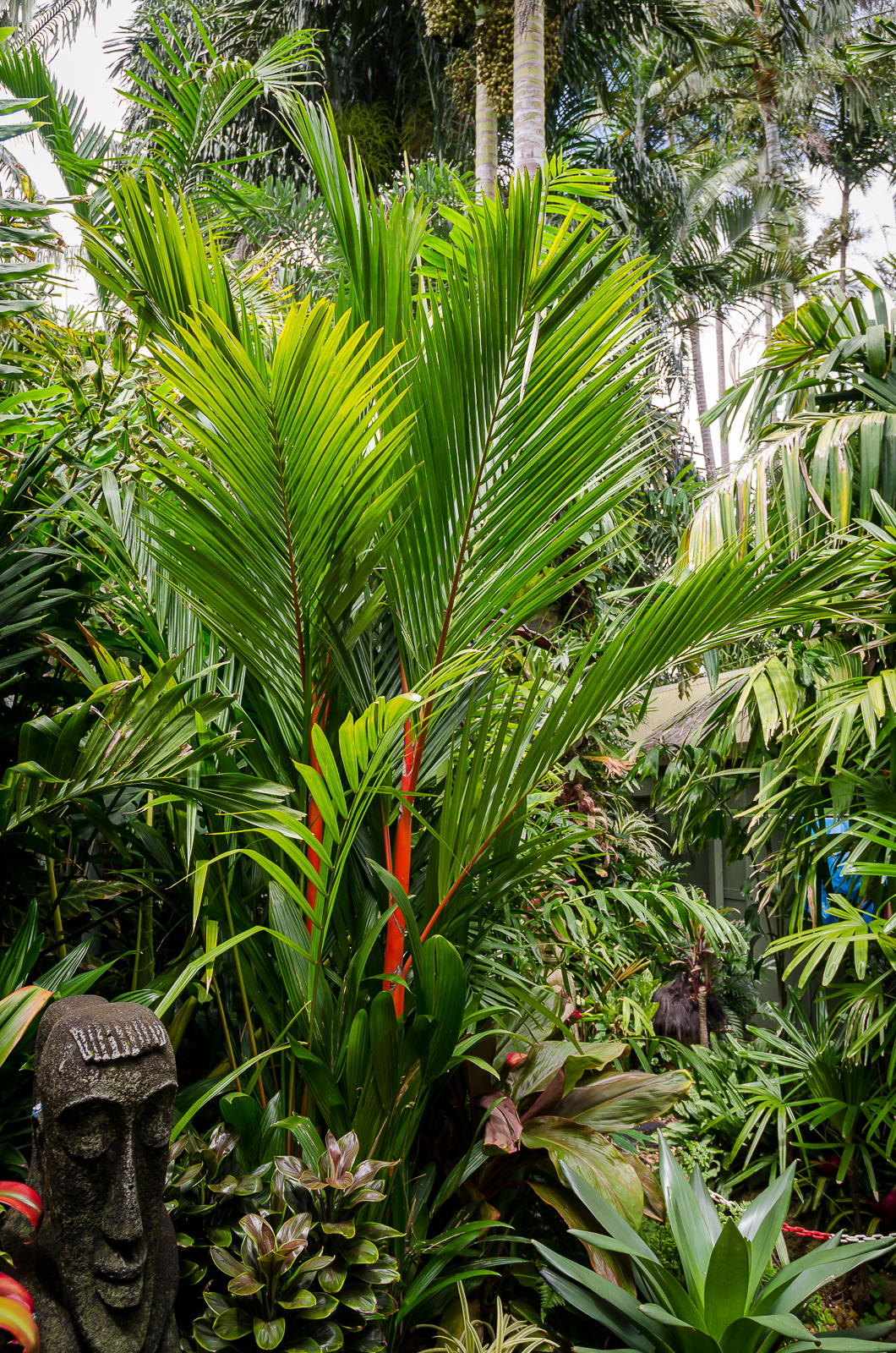
Slender, clustering palm with up to about 3 or more adult stems up to 15 (– 20) m high. Stem about 6 – 10 cm in diam., green with greyish stripes or yellow with somewhat greenish and purplish stripes, internodes 15 – 24 cm long, crown appearing shuttle-cock shaped. Leaves 7 – 10 per crown, erect, stiff, to 150 cm long; sheath tubular, about 100 cm long, forming distinct crownshaft, scarlet to bright red, with scattered black thick scales; petiole elongate, 5 – 50 cm long, 1.5 – 2.5 cm wide and 1 – 2 cm thick at the base, channelled adaxially, rounded abaxially, red, indumentum as sheath; leaflets regularly arranged, leathery, 26 – 40 leaflets on each side, 56 – 107 × 3 – 6 cm at middle portion, apical leaflets 10 – 20 × 1 – 2 cm, briefly pointed with long tip and sometimes notched at apices, green, discolorous when dried, glaucous adaxially, waxy white abaxially, mid-vein with discontinuous membranous brown scales. Inflorescence strongly divaricate, to 90 cm long, branched to 2 (possibly 3) orders, creamy, green to dark purplish-red; peduncle 5 – 8 cm long; rachilla 27 – 73.5 cm long and 4 – 6 mm in diam., calyx persistent on rachillae when fruits fallen off; pits 2 – 5 mm in diam., 5 – 7 pits per 1 cm rachilla length. Staminate flowers 2 – 2.5 × 2 – 3 mm, asymmetrical; sepals 1.8 – 2 × 2 mm, imbricate, rounded, strongly keeled; petals 1 – 2 × 1 – 1.8 mm, triangular, brown at apex and base; stamens 12 – 15; filaments 0.7 – 1 × 0.2 – 0.3mm; anthers 1 – 1.5 × 0.5 – 0.8mm; pollen size, long axis 36 – 43 μm, short axis 27 – 33 μm, proximal wall thickness 1.5 – 2 μm, distal wall thickness not observed, tectum surface microfossulate-rugulate, trichotomosulcate grains present; pistillode 0.7 – 1 × 0.2 – 0.5 mm, trifid. Pistillate flowers 4 – 5 × 3 – 4 mm; sepals 3 – 4 × 2 – 3 mm, imbricate, strongly keeled, dark brown to black; petals 3 – 3.5 × 2 – 2.5 mm; gynoecium 3.5 × 1.5 mm (including three recurved stigma 0.5 – 1 mm); staminodes circular, 0.5 – 1 mm height. Fruits 7 – 10 × 4 – 7 mm, ellipsoid to ovoid, light green becoming black when ripe. Seeds 4 – 5 × 3 – 5 × 3 – 5, ellipsoid to ovoid. (Ch.D. Heatubun. 2009)/Palmweb.
Cyrtostachys renda, differs from all other species in its genus, in the bright red crownshaft and leaf sheath, the lowest number of pinnae (26 – 40 on each side), the pinnae being waxy white abaxially, the inflorescence branched mostly to 2 orders (possibly up to 3), the tectum surface of pollen rugulate, and its preferred habitat in lowland peat swamp forest, in southern Thailand, Malay Peninsula, Sumatra and Borneo. In the protologue of Cyrtostachys renda, no material is cited, although a reference is made to Blume’s account in Rumphia, published some years later, in which the Korthals specimen is mentioned (Blume 1838, 1843). We formally designate this specimen as lectotype. In the case of C. lakka, Beccari (1885) cited two specimens, Beccari PB 2674 and 4038, both of which are extant at FI. Harold E. Moore annotated Beccari PB 2674 (FI) as lectotype in 1956, but to our knowledge did not publish this lectotypification. We have formalised this typification here. The transfer of Cyrtostachys lakka to a synonym of C. renda has already been made by Whitmore (1982). The bright green stems, and brilliant red to orange crownshafts, make Cyrtostachys renda a highly desirable and widely cultivated ornamental. Infraspecific taxa have been described, from cultivation and the number of these could increase in parallel to horticultural demand. Ellison & Ellison (2001) introduced two cultivars, C. renda ‘Apple’ and C. renda ‘Orange Crownshaft’, followed by Waddel (2002) with his C. renda ‘Theodora Buhler’. Before them, Tucker (1992) reported, that in Singapore Botanic Garden grew C. renda ‘Ruby’ and that it was one of the most treasured specimens of all, and he also discussed a strange brown crownshafted form of C. renda in Florida. All the cultivars of C. renda were described based on different stem and crownshaft colours. (Ch.D. Heatubun. 2009)/Palmweb.
Cyrtostachys renda, differs from all other species in its genus, in the bright red crownshaft and leaf sheath, the lowest number of pinnae (26 – 40 on each side), the pinnae being waxy white abaxially, the inflorescence branched mostly to 2 orders (possibly up to 3), the tectum surface of pollen rugulate, and its preferred habitat in lowland peat swamp forest, in southern Thailand, Malay Peninsula, Sumatra and Borneo. In the protologue of Cyrtostachys renda, no material is cited, although a reference is made to Blume’s account in Rumphia, published some years later, in which the Korthals specimen is mentioned (Blume 1838, 1843). We formally designate this specimen as lectotype. In the case of C. lakka, Beccari (1885) cited two specimens, Beccari PB 2674 and 4038, both of which are extant at FI. Harold E. Moore annotated Beccari PB 2674 (FI) as lectotype in 1956, but to our knowledge did not publish this lectotypification. We have formalised this typification here. The transfer of Cyrtostachys lakka to a synonym of C. renda has already been made by Whitmore (1982). The bright green stems, and brilliant red to orange crownshafts, make Cyrtostachys renda a highly desirable and widely cultivated ornamental. Infraspecific taxa have been described, from cultivation and the number of these could increase in parallel to horticultural demand. Ellison & Ellison (2001) introduced two cultivars, C. renda ‘Apple’ and C. renda ‘Orange Crownshaft’, followed by Waddel (2002) with his C. renda ‘Theodora Buhler’. Before them, Tucker (1992) reported, that in Singapore Botanic Garden grew C. renda ‘Ruby’ and that it was one of the most treasured specimens of all, and he also discussed a strange brown crownshafted form of C. renda in Florida. All the cultivars of C. renda were described based on different stem and crownshaft colours. (Ch.D. Heatubun. 2009)/Palmweb.
Culture & Care
Tropical. Hardiness: USDA zone: 11
/