Pritchardia pacifica
ARECACEAE
•
Tonga
Description
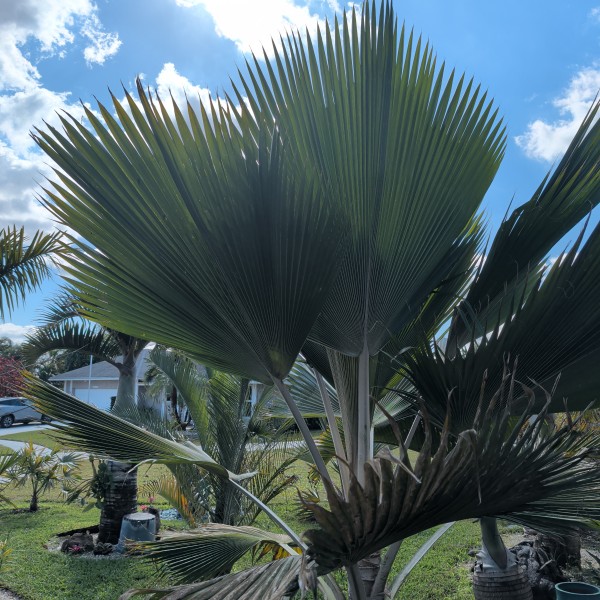
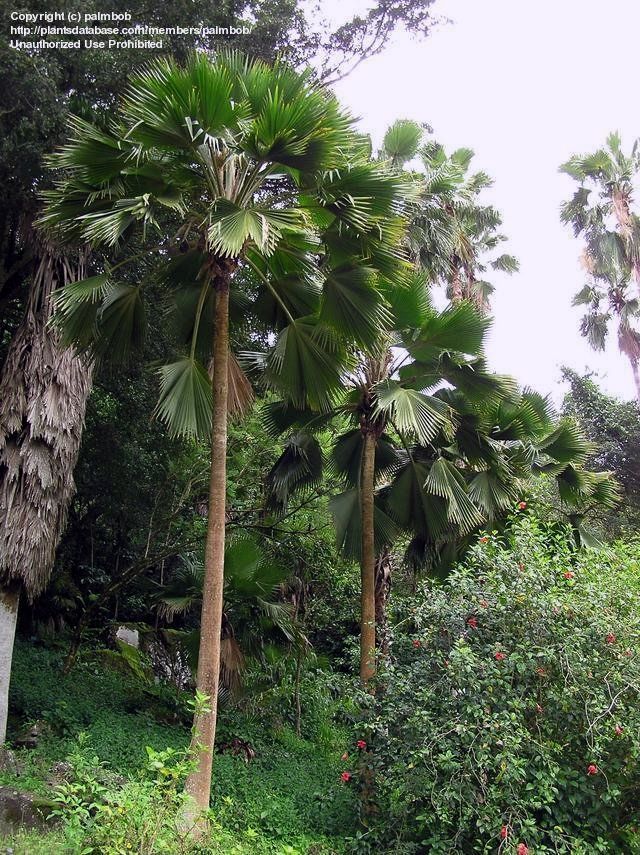
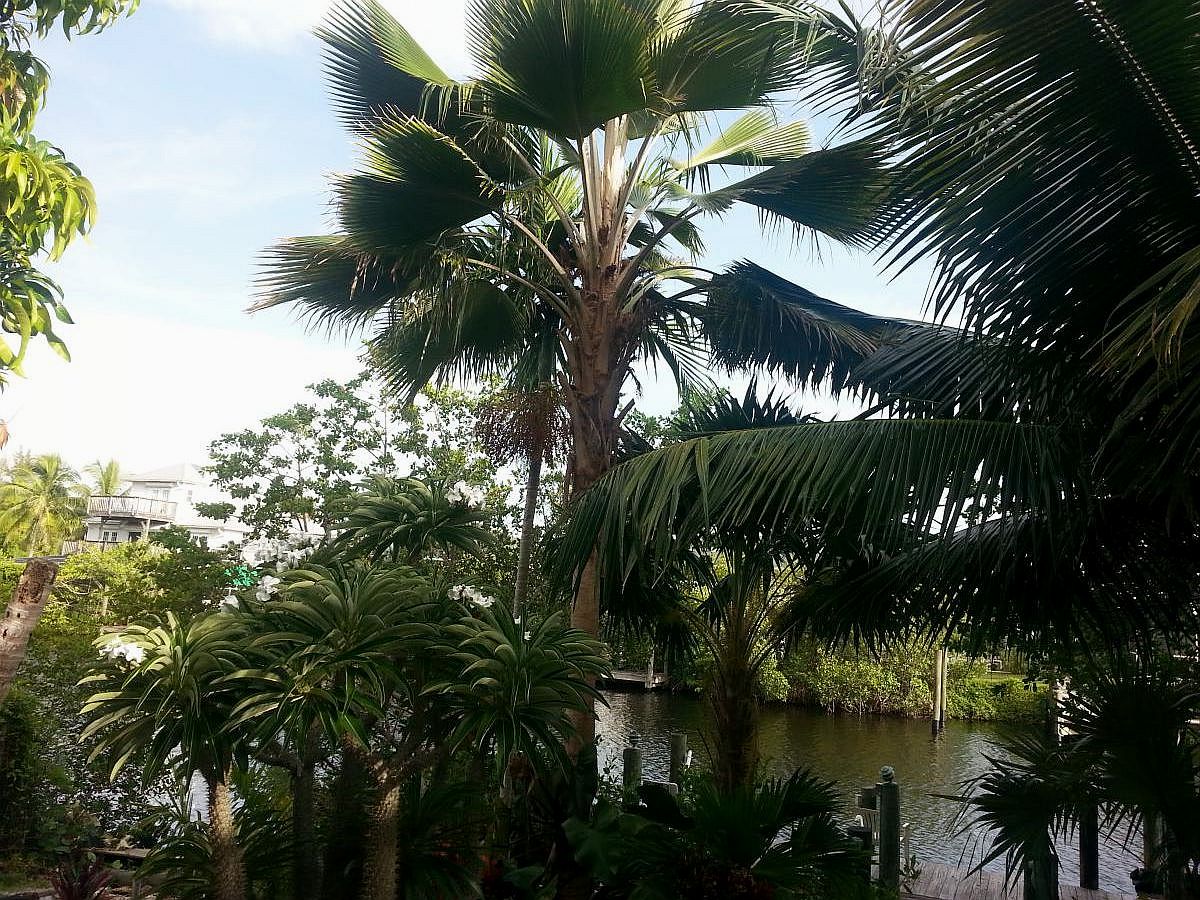
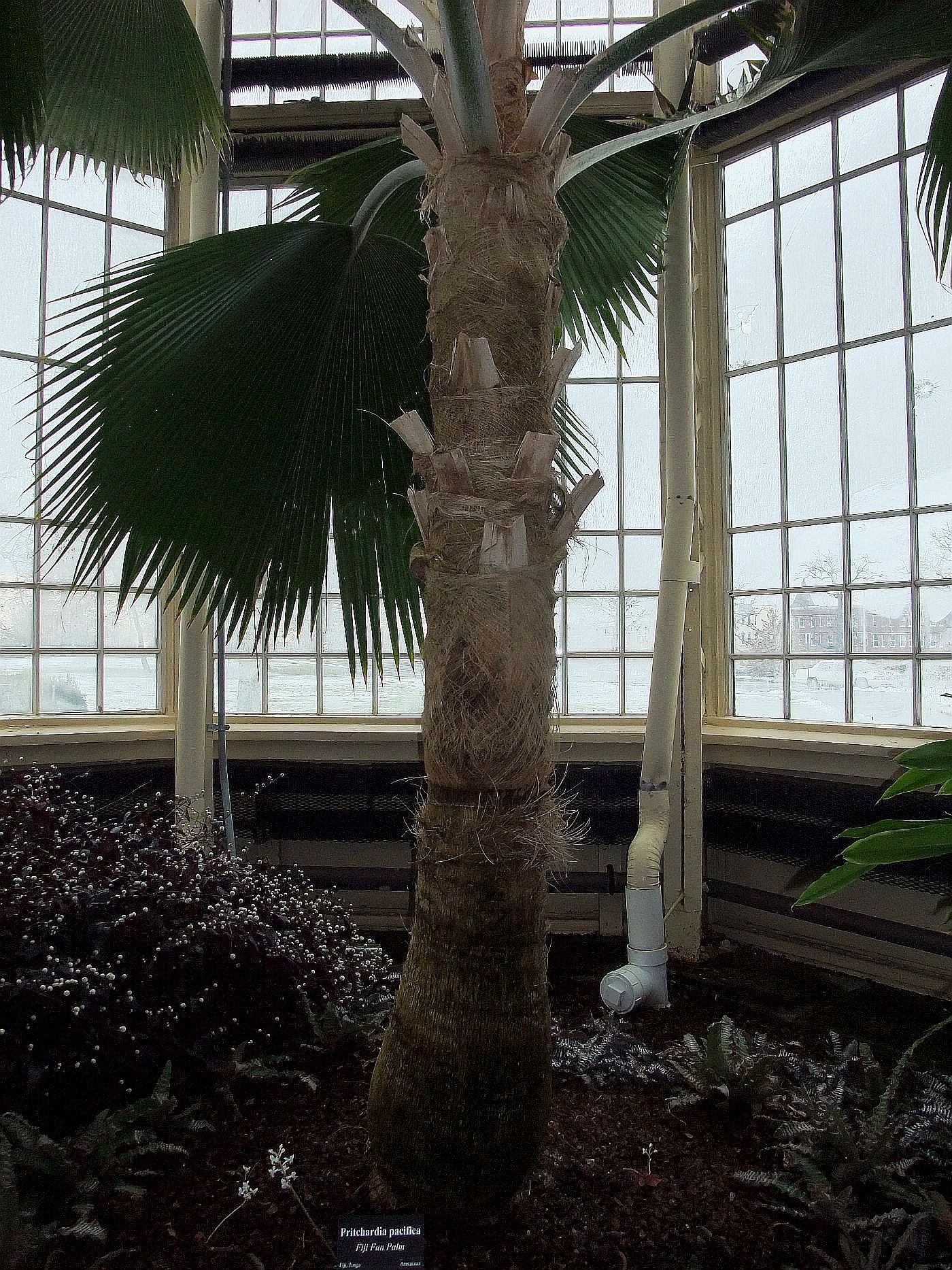
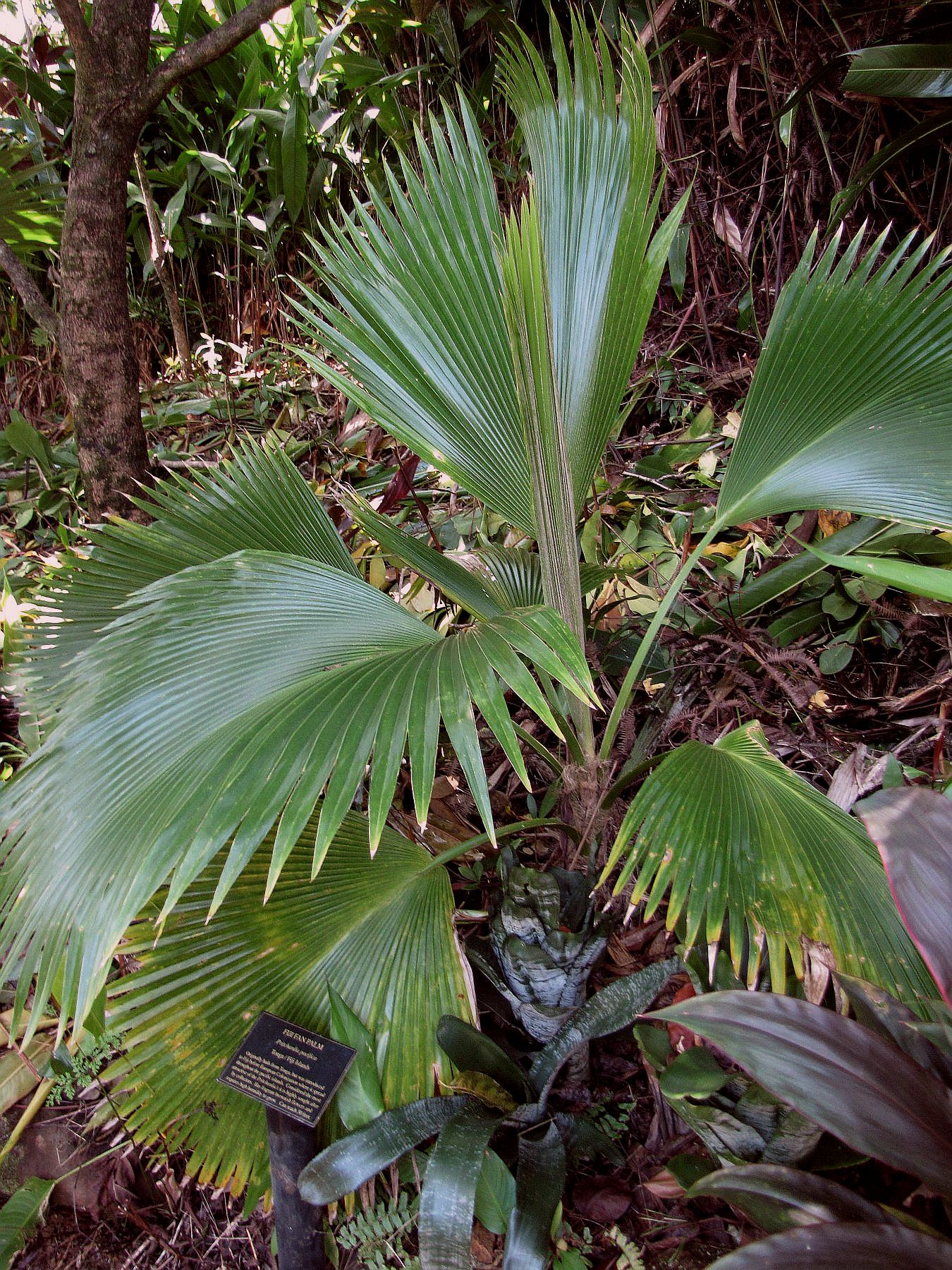
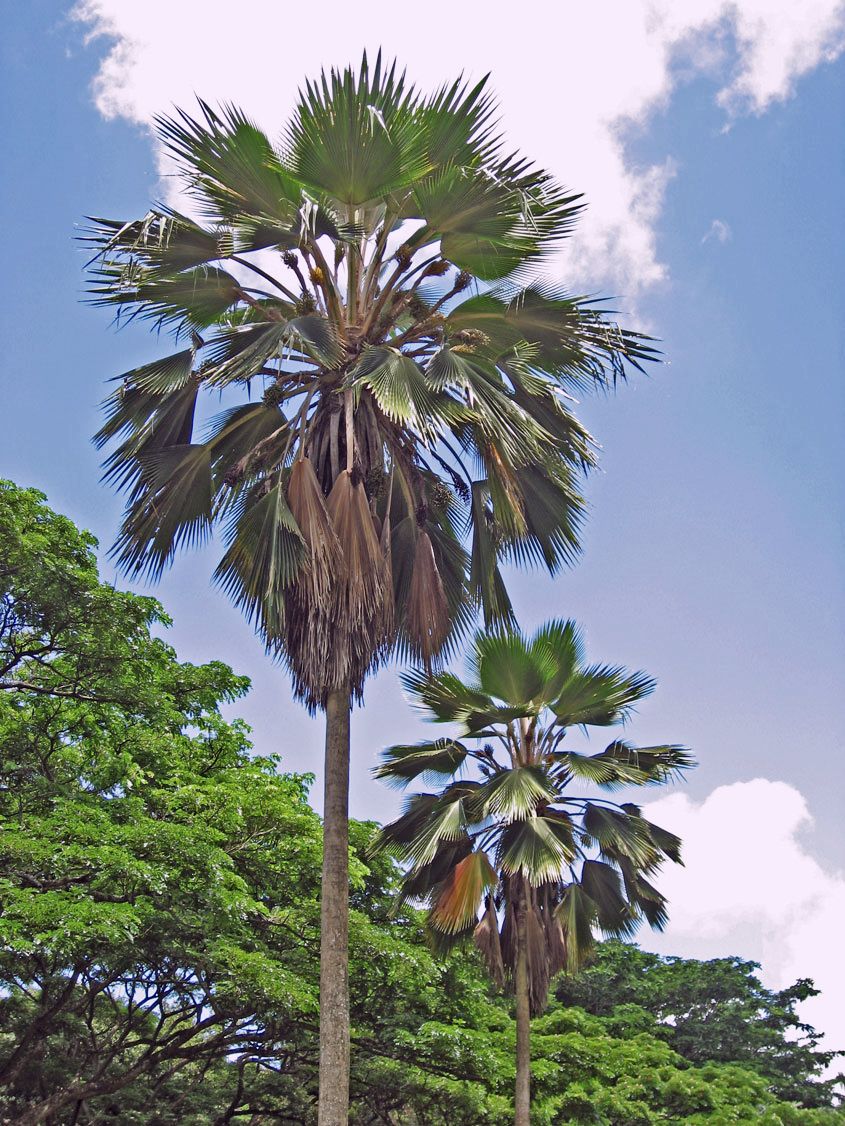
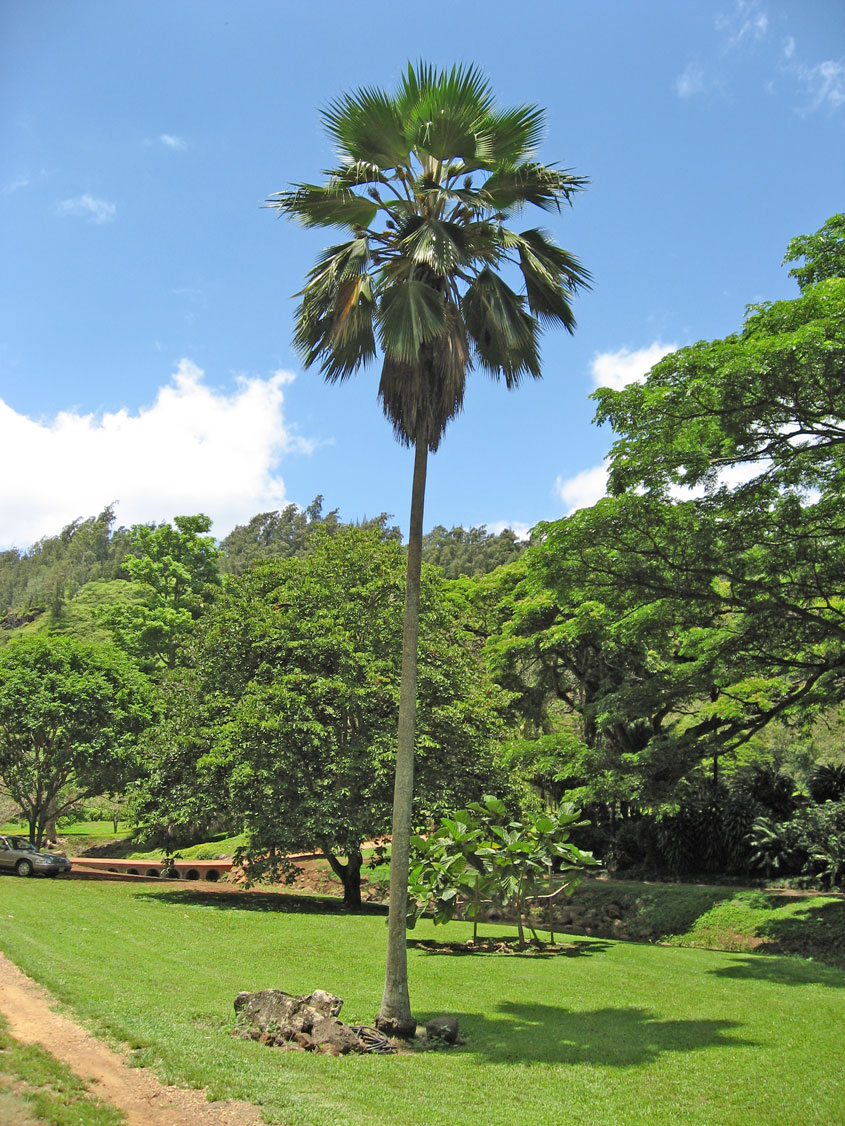
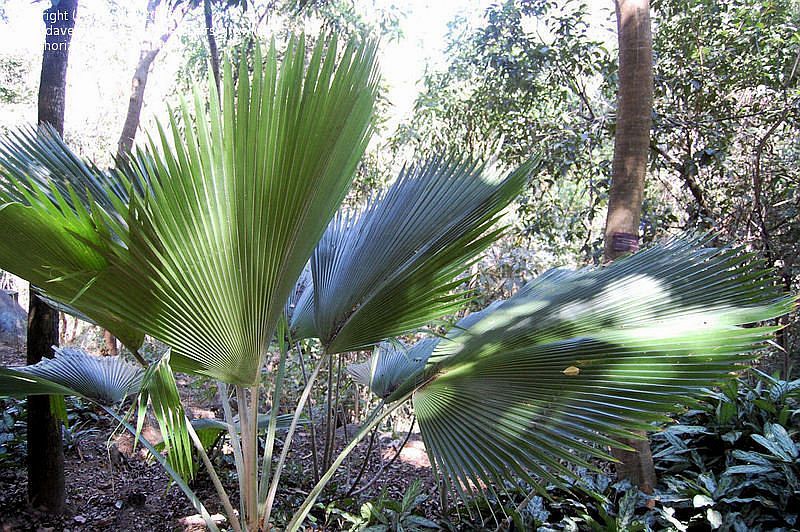
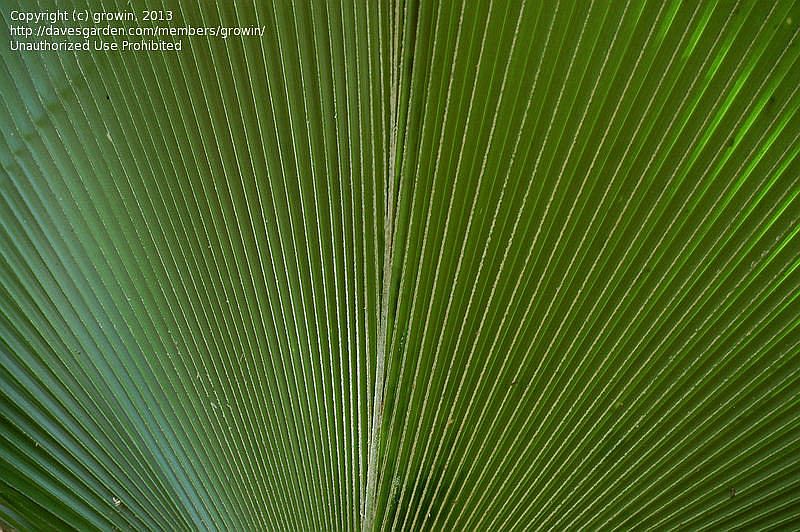
Solitary palm to 15 m tall; proximal margins of petiole with only a few fibers; leaf blade undulate, divided 1/4-1/3, slightly waxy-glaucous, abaxial surface more or less devoid of lepidia, segment tips stiff; inflorescences composed of 1-4 panicles, shorter than to equaling petioles in flower and fruit, panicles branched to 2 orders, rachillae glabrous; fruits 11-12 mm in diam., globose. (Hodel, D. 2007)/Palmweb.
Pritchardia pacifica is distinguished by its rounded, undulate leaf blades with stiff segment tips and abaxial surface more or less devoid of lepidia, inflorescences shorter than or equaling the petioles, and small S-38 fruits. Perhaps the most widely cultivated species of the genus in tropical landscapes and gardens, it is among the most handsome of palms. Truly natural populations of Pritchardia pacifica are unknown. Dennis and McQueen (1989) reported it groWing wild on Nggela Island north of Guadaleanal in the Solomon Islands but referred to it as P. wood(ordiana, a name of no botanical standing. Pritchardia pacifica has erroneously been reported to be growing wild on Eua Island in Tonga (Lister 1893, Beccari & Rock 1921, Watling 200S), but the species there is actually P. thurstonii. Burkill (1901) reported P. pacifica on Vavau Island of Tonga, but I have not seen the specimen at K to verify its identity. (Hodel, D. 2007)/Palmweb.
Pritchardia pacifica is distinguished by its rounded, undulate leaf blades with stiff segment tips and abaxial surface more or less devoid of lepidia, inflorescences shorter than or equaling the petioles, and small S-38 fruits. Perhaps the most widely cultivated species of the genus in tropical landscapes and gardens, it is among the most handsome of palms. Truly natural populations of Pritchardia pacifica are unknown. Dennis and McQueen (1989) reported it groWing wild on Nggela Island north of Guadaleanal in the Solomon Islands but referred to it as P. wood(ordiana, a name of no botanical standing. Pritchardia pacifica has erroneously been reported to be growing wild on Eua Island in Tonga (Lister 1893, Beccari & Rock 1921, Watling 200S), but the species there is actually P. thurstonii. Burkill (1901) reported P. pacifica on Vavau Island of Tonga, but I have not seen the specimen at K to verify its identity. (Hodel, D. 2007)/Palmweb.
Culture & Care
Cold hardy to USDA Zone 10, however plants generally dislike temperatures below 55-60 degrees F., and may not survive when temperatures dip to near freezing. Best grown in moist, well-drained soils in full sun to light shade. Grows well as a houseplant in a sunny room. Containers may be taken outside in late spring when warm temperatures arrive. (Missouri Botanical Garden)
Lethal yellowing (present in Florida) is a significant and deadly phytoplasma disease of palms (spread by a planthopper - Myndus crudus) that causes yellowed fronds, blackened flowers and premature fruit drop. (Missouri Botanical Garden)
Lethal yellowing (present in Florida) is a significant and deadly phytoplasma disease of palms (spread by a planthopper - Myndus crudus) that causes yellowed fronds, blackened flowers and premature fruit drop. (Missouri Botanical Garden)
/